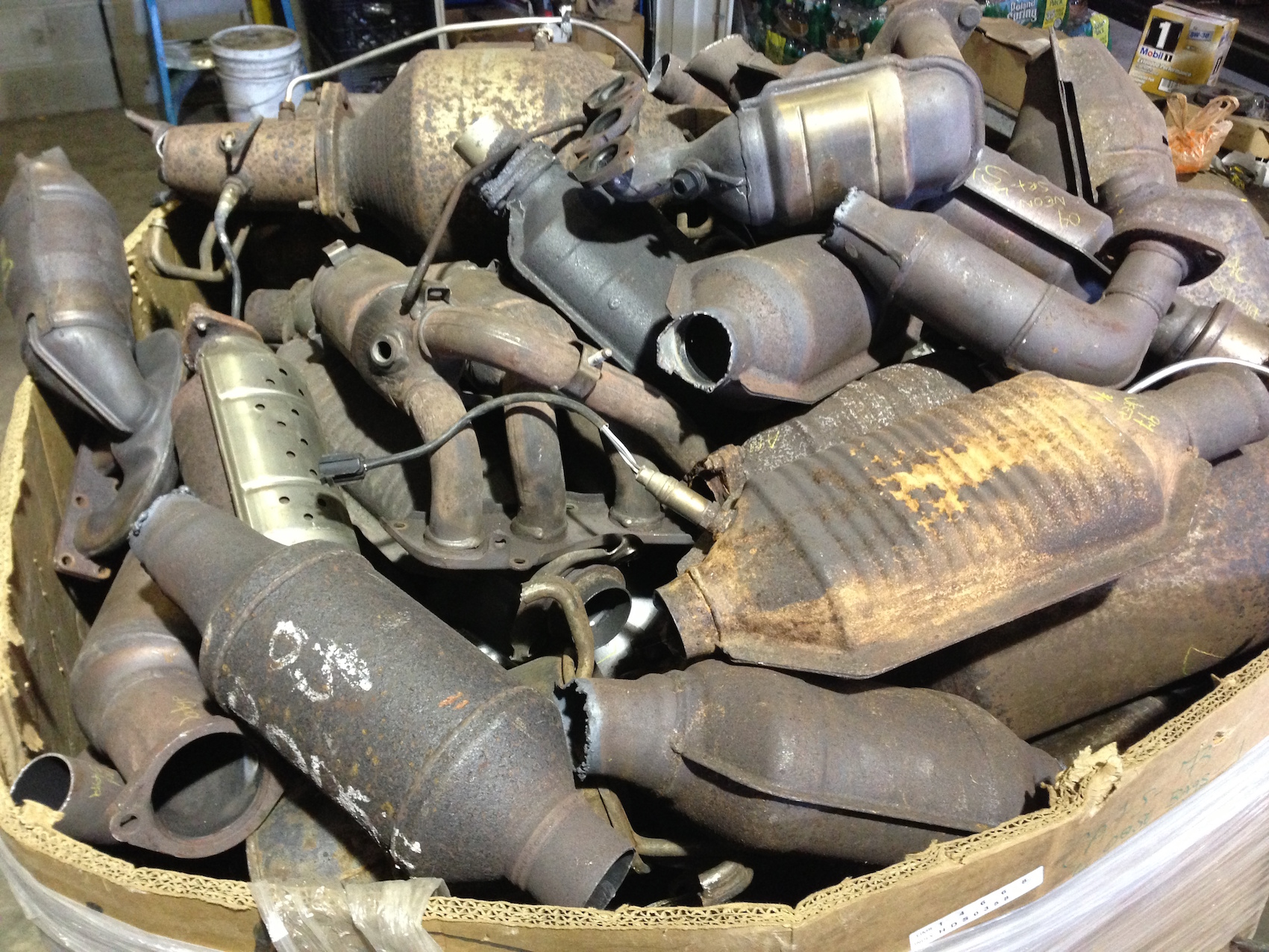
Most catalytic converters scrap for between £20 and £400, and the best hybrid units can beat that several times over. The value is in three precious metals coating the core: platinum, palladium and rhodium, all rarer than gold. When you scrap your car with Remove My Car, the converter's value is already included in your quote. You do not need to remove it or sell it separately.
What is a catalytic converter worth?
It depends almost entirely on the metal inside, and that varies more than most people expect. Two units that look identical can be worth very different amounts. As a guide, UK trade prices in summer 2026 look like this:
| Type | Indicative scrap value | Why |
|---|
| Most petrol and diesel units | £20 to £400 | Metal loading varies by engine size and age |
| Hybrid units | Several hundred pounds, the best £400 to £800 | Run cooler, degrade less, carry more metal |
| Cheap aftermarket replacements | £2 to £10 | A fraction of the precious metal in an original unit |
Indicative standalone ranges from UK trade price guides, summer 2026. Values move daily with the metal markets, so the only real number is a quote.
The metal quantities involved are tiny, which makes the values more remarkable. A typical unit carries somewhere between three and seven grams of platinum, two and seven grams of palladium and one and two grams of rhodium. Rhodium is the one that does the damage: it has traded at around ten times the price of gold.
What moves the price
The vehicle it came from. Larger engines generally carry more precious metal. Hybrids carry the most valuable units of all, because their petrol engines run less often and at lower temperatures, so the converter degrades less.
Original or aftermarket. An original manufacturer unit contains several times the metal of a cheap replacement. If your converter has ever been swapped, the brand stamp on the casing tells the story.
The stamped code. Serious buyers do not guess. Each unit carries a manufacturer code, and buyers price it against a database of known metal loadings for that exact part. A missing or ground-off code lowers the offer.
The metal markets. Platinum, palladium and rhodium trade daily on global commodity markets, so converter prices move with them, the same way scrap car prices track the wider metal market.
Should you remove it before scrapping the car?
No, and this matters. Your scrap quote assumes a complete vehicle. A car arriving at the yard with its converter missing is worth substantially less, and in most cases the deduction outweighs anything you would make selling the unit separately.
There is a safety issue too. The inside of a converter is classed as hazardous waste once opened, and breaking into one without specialist equipment exposes you to toxic material.
Selling one separately? No cash, everIf you do sell a converter to a scrap metal dealer, the same rules apply as for the whole car: payment must be traceable, never cash, under the Scrap Metal Dealers Act 2013. Any buyer offering cash is breaking the law, and that tells you everything about how the rest of the deal will go.
How catalytic converters are recycled
When your car reaches an Authorised Treatment Facility, the converter comes off during the depollution stage of the vehicle recycling process, is stored intact, and goes on to a specialist recycler. They extract the platinum, palladium and rhodium from the ceramic core and recycle the steel casing separately.
The recovered metals end up in new catalytic converters, electronics, medicine, dentistry and jewellery. If you would like to see it happen, SAR Recycling Ltd in Immingham has a public viewing area where you can watch the processing.
An intact converter is classed as controlled waste, because a sealed unit poses no significant risk. The moment one is opened and the ceramic inside is exposed to the air, it becomes hazardous waste and has to be handled accordingly. One more reason this is a job for trained specialists rather than a hacksaw in the driveway.
Catalytic converter theft
The same metals that give a converter its value made them a target for thieves, who can cut one from under a parked car in under a minute. Hybrids were hit hardest, for the same reason their units are worth the most.
If your converter has been stolen, the car is still worth scrapping. It will affect your quote, but a licensed yard will recycle what remains properly and legally, and the rest of the car keeps its value: the engine has real scrap value of its own, and so does the battery.
The simple version
Leave the converter on the car. Its value comes back to you through your quote, the specialists handle the hazardous part, and you never touch it. If you are starting from scratch, the five steps to scrapping a car covers the whole process in order.
Ready to scrap your car?
Get an instant price. Converter included, free collection, Certificate of Destruction issued.
Get a quotePrice ranges compiled from UK trade price guides, summer 2026, including metal loading figures published by UK metal recyclers. Cash payment ban: Scrap Metal Dealers Act 2013. Checked 28 August 2026.